 English
 Français
Content
- 1 Low Thermal Conductivity of ASA Synthetic Resin Tile
- 2 Solar Heat Reflection and Reduced Heat Absorption
- 3 Contribution to Lower Indoor Temperature Fluctuations
- 4 Enhanced Thermal Performance in Hot and Tropical Climates
- 5 Dimensional and Thermal Stability Under Temperature Extremes
- 6 Limitations Compared to Dedicated Insulation Systems
Low Thermal Conductivity of ASA Synthetic Resin Tile
ASA Synthetic Resin Tile demonstrates inherently low thermal conductivity due to the molecular composition of its polymer matrix, which restricts heat transfer between the external environment and the building’s interior. Unlike metal roofing, which rapidly conducts heat through direct molecular vibration and thermal bridging, ASA resin relies on a dense, non-metallic structure that slows the rate of heat movement. Because the resin does not easily transmit heat, the interior space remains cooler during peak sunlight exposure. This property is enhanced by the tile’s multilayer configuration, which may include a core layer designed to trap microscopic air pockets that further resist conductive heat transfer.
These micro-air spaces act as localized insulation zones that disrupt direct heat flow. As a result, the overall thermal performance of ASA Synthetic Resin Tile is far superior to many conventional roofing materials in warm climates, contributing to reduced cooling loads, better indoor comfort, and more stable temperature control throughout the day, even when the roof is fully exposed to strong solar radiation.
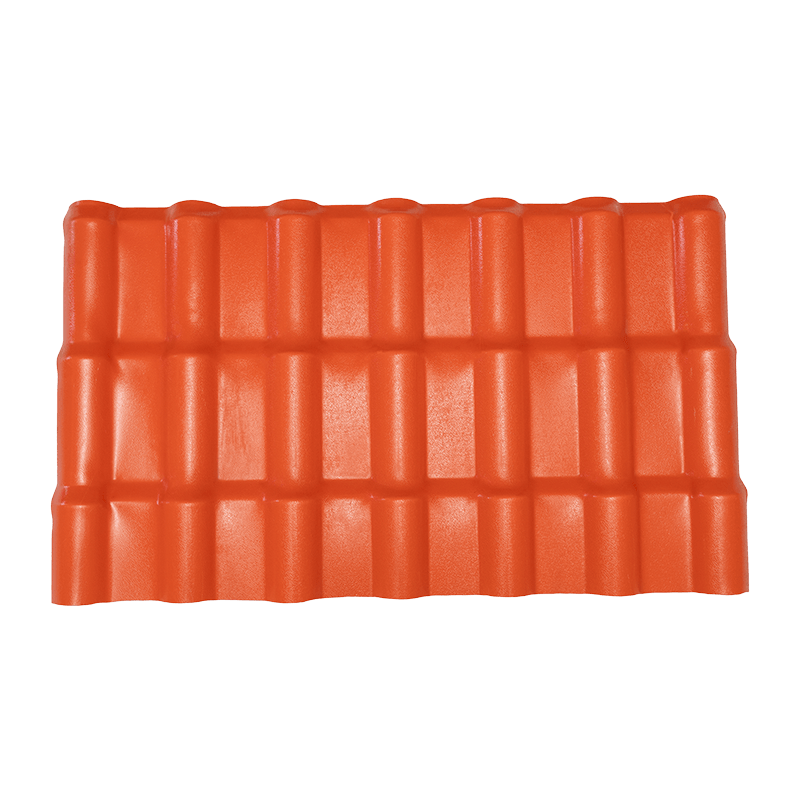
ASA Synthetic Resin Tile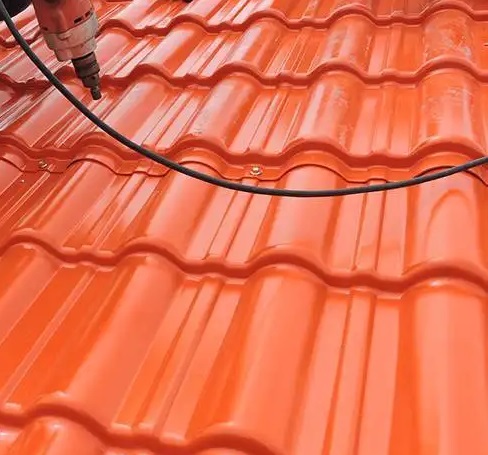
Solar Heat Reflection and Reduced Heat Absorption
ASA Synthetic Resin Tile utilizes high-performance ASA surface compounds engineered to reflect a significant portion of solar infrared radiation, decreasing the total heat absorbed by the roof structure. The ASA top layer incorporates specialized UV-resistant pigments and stabilizers that maintain reflectivity even after prolonged exposure to sunlight, weathering, and environmental pollutants. This is critical because many roofing materials lose reflectivity over time due to oxidation or fading, but ASA maintains its thermal-reflective efficiency for years. When sunlight strikes the tile, a substantial fraction of the thermal energy is reflected outward rather than being absorbed into the building envelope. This reduces the peak temperature of the roof surface during midday and minimizes the heat-transfer gradient into the building. Consequently, less heat penetrates the interior, which helps reduce air-conditioning requirements, prevents overheating of attic spaces, and improves the building’s energy efficiency. This reflective capacity makes ASA Synthetic Resin Tile particularly advantageous in regions with intense solar exposure and high daily temperatures.
Contribution to Lower Indoor Temperature Fluctuations
ASA Synthetic Resin Tile contributes to significantly lower indoor temperature fluctuations by moderating the rate at which heat enters or exits the building through the roof. Because thermal conductivity is low and solar absorption is minimized, daytime heat intrusion is reduced, enabling the indoor temperature to remain closer to a stable, comfortable range. During nighttime cooling cycles, the tile’s low thermal mass prevents it from releasing accumulated heat into the interior, unlike materials such as concrete or clay that re-radiate stored heat well into the evening. This results in smoother transitions between day and night indoor temperatures. Reduced temperature fluctuation also benefits HVAC systems by lowering their operational cycles, thereby extending equipment lifespan and reducing energy costs. For buildings with large roof surfaces—such as factories, warehouses, or residential properties—this thermal stability directly enhances comfort levels and minimizes the occurrence of sudden indoor temperature spikes or drops, making the living or working environment more consistent and predictable throughout the day.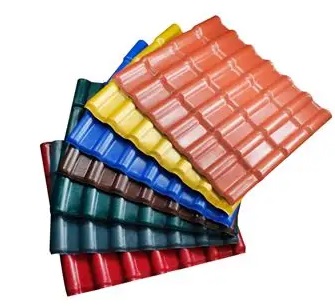
Enhanced Thermal Performance in Hot and Tropical Climates
In hot, humid, or tropical regions, ASA Synthetic Resin Tile offers significant thermal advantages due to its capacity to resist solar heat gain and minimize conductive heat transfer. Traditional metal roofing can become extremely hot under tropical sun, often transferring that heat into the building within minutes. In contrast, ASA tiles maintain a much lower surface temperature due to their heat-reflective ASA layer and insulating resin substrate. This results in noticeably cooler indoor conditions even when ambient temperatures exceed 35°C. In many climates, this can reduce air-conditioning usage by several hours per day, contributing to meaningful energy savings. Additionally, ASA tiles are resistant to thermal deformation, enabling them to perform consistently despite daily cycles of intense sunlight followed by rapid cooling. This thermal resistance helps preserve structural integrity in environments where high UV intensity and high humidity can degrade conventional roof systems. As a result, ASA tiles provide both immediate thermal comfort and long-term performance stability in demanding tropical environments.
Dimensional and Thermal Stability Under Temperature Extremes
ASA Synthetic Resin Tile maintains superior dimensional stability under large temperature variations due to the specific thermal-resistant properties of the ASA polymer. Many roofing materials expand and contract significantly when exposed to extreme heat or cold, leading to cracking, warping, loosening of fasteners, or structural fatigue over time. ASA resin, however, is engineered to withstand repeated temperature cycling without substantial dimensional change. This stability ensures that the tile remains properly sealed, aligned, and structurally sound, preserving its insulation performance.
Even when temperatures rise above 70°C on the roof surface—a common occurrence in summer—the ASA tile resists deformation, maintaining its shape and protective functionality. Similarly, in colder climates, ASA does not become brittle or susceptible to cracking. This long-term thermal stability not only protects the building from environmental stress but also maintains consistent thermal performance by preventing gaps or misalignments that could compromise insulation or allow heat leakage.
Limitations Compared to Dedicated Insulation Systems
While ASA Synthetic Resin Tile provides meaningful thermal benefits, it is important to emphasize that the tile alone cannot replace dedicated insulation systems designed specifically for high-performance heat retention or heat-blocking applications. Materials such as polyurethane foam, rock wool, and insulated composite panels have much lower thermal-conductivity values and are engineered to achieve building-grade insulation levels that meet strict energy-efficiency codes. Therefore, buildings in extreme climates or requiring highly controlled interior environments may still need supplementary insulation beneath the ASA tile.
The tile should be viewed as the first layer of thermal defense—effective at reducing heat gain and reflecting sunlight, but not capable of delivering comprehensive insulation on its own. Additionally, ASA tiles do not prevent conductive heat transfer through structural components such as roof beams, which may still require insulation treatment. Understanding these limitations enables architects and builders to design complete, multi-layer roofing systems that maximize both energy efficiency and building comfort.