 English
 Français
Content
- 1 Introduction
- 2 What is ASA Synthetic Resin Roof Tile?
- 3 What is PVC Roof Sheet?
- 4 Detailed Comparison: ASA vs. PVC
- 5 Pros and Cons of ASA Synthetic Resin Roof Tile
- 6 Pros and Cons of PVC Roof Sheets
- 7 Detailed Comparison: ASA vs. PVC
Introduction
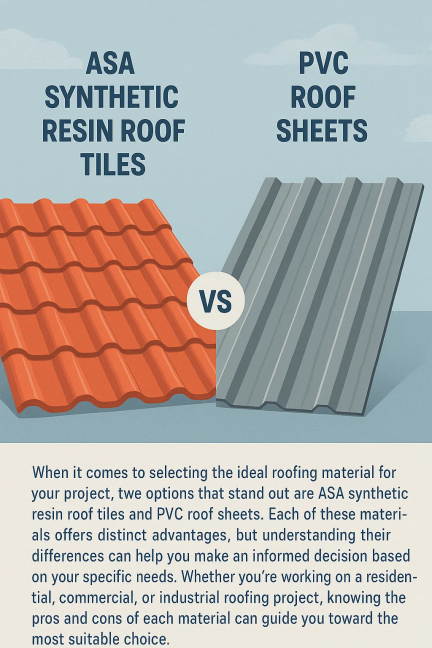
When it comes to selecting the ideal roofing material for your project, two options that stand out are ASA synthetic resin roof tiles and PVC roof sheets. Each of these materials offers distinct advantages, but understanding their differences can help you make an informed decision based on your specific needs. Whether you're working on a residential, commercial, or industrial roofing project, knowing the pros and cons of each material can guide you toward the most suitable choice.
What is ASA Synthetic Resin Roof Tile?
Definition and Composition of ASA Material
ASA (Acrylonitrile Styrene Acrylate) synthetic resin roof tiles are a high-performance roofing material known for their excellent durability and resistance to harsh weather conditions. ASA is a copolymer that combines three key components—acrylonitrile, styrene, and acrylate—to create a material with exceptional strength, weather resistance, and UV stability.
The acrylonitrile provides chemical resistance, while styrene adds structural integrity and acrylate enhances the material’s weathering resistance. ASA's unique composition gives it the ability to withstand extreme temperatures, UV exposure, and other environmental factors without significant degradation over time.
Manufacturing Process
The manufacturing process for ASA synthetic resin roof tiles typically involves an advanced extrusion or injection-molding technique. In the extrusion process, the ASA resin is heated and shaped into long, continuous sheets or tiles. These tiles are then cut into specific sizes, ready to be installed. During this process, the tiles are often treated with UV stabilizers and additional coatings to enhance their color retention and resistance to fading.
In some cases, ASA roof tiles can be coated with additional layers of protective finishes to improve their performance further, such as anti-microbial or anti-fungal coatings. This extra layer of protection helps maintain the aesthetics and longevity of the roof, even in harsh climates.
Key Features and Benefits of ASA Synthetic Resin Roof Tiles
Durability
One of the primary advantages of ASA synthetic resin roof tiles is their remarkable durability. Unlike traditional clay or concrete tiles, ASA tiles are lightweight yet extremely tough, offering superior protection against impacts, cracks, and other damage. This durability makes ASA roof tiles ideal for areas prone to heavy storms or high winds.
In terms of lifespan, ASA tiles can last up to 50 years or more with proper maintenance, making them a long-term investment for your roof. Their resilience to damage from hail, falling debris, or extreme weather ensures they will continue to perform over the years.
Weather Resistance (UV, Rain, and More)
The weather resistance of ASA synthetic resin roof tiles is one of their standout features. ASA materials are inherently UV resistant, which means they won’t break down or become brittle when exposed to prolonged sunlight. This characteristic makes them ideal for regions that experience intense sun exposure.
In addition to UV resistance, ASA tiles are also highly resistant to moisture and rain. The resin material doesn’t absorb water, preventing issues like mold or mildew growth. Furthermore, ASA tiles do not warp or swell when exposed to rain, unlike some other roofing materials.
Color Retention
One of the main concerns with roofing materials, especially those exposed to harsh sun and weather conditions, is the potential for color fading. ASA synthetic resin tiles excel in this area thanks to their excellent color retention. The combination of acrylic in the ASA formulation helps maintain the vibrant color of the tiles for many years without significant fading, even under direct sunlight.
This makes ASA tiles a great option for homeowners or businesses looking for long-lasting aesthetics. Additionally, the wide variety of colors available allows for design flexibility, making it easier to match the tiles to your building’s style.
Environmental Friendliness
Another benefit of ASA synthetic resin roof tiles is their environmental friendliness. ASA is considered a more eco-friendly option compared to traditional roofing materials like asphalt shingles or clay tiles. The material is recyclable, and the manufacturing process generally results in lower carbon emissions compared to other materials, making it a greener choice for your roofing needs.
Moreover, ASA tiles contribute to energy efficiency by reflecting sunlight, which helps maintain cooler indoor temperatures during hot weather, reducing the need for air conditioning.
Aesthetics
ASA synthetic resin tiles offer a high level of aesthetic appeal due to their variety of available colors and styles. Whether you're looking for a traditional look with terracotta or a more modern design, ASA tiles can be molded into a variety of shapes, sizes, and finishes to suit your architectural preferences.
The tiles' sleek, smooth surface gives them a clean, polished appearance, adding to the overall curb appeal of your property. Their ability to retain their color over time ensures that your roof continues to look as good as new, even after years of exposure to the elements.
What is PVC Roof Sheet?
Definition and Composition of PVC Material
PVC (Polyvinyl Chloride) is a widely-used synthetic plastic polymer, commonly known for its versatility and cost-effectiveness in various applications, including roofing. PVC roof sheets are made from a blend of polyvinyl chloride resin, stabilizers, and plasticizers, giving the material its flexibility, strength, and resistance to environmental stressors.
The composition of PVC allows for the creation of lightweight yet durable roofing sheets that can withstand significant exposure to the elements without cracking or degrading. The material is especially popular in construction for its ease of use, cost-efficiency, and range of applications.
Manufacturing Process
The manufacturing process of PVC roof sheets generally involves an extrusion technique, where PVC resin is heated, melted, and forced through a mold to create long sheets or panels. These sheets are then cut to the required length and sometimes treated with UV inhibitors to enhance their resistance to sunlight.
PVC roof sheets may also be reinforced with fiberglass to improve structural strength. Depending on the application, these sheets can be smooth or have textured finishes, which provide enhanced grip and additional aesthetic appeal. In addition, PVC roof sheets can be manufactured in a variety of colors, offering design flexibility for different architectural styles.
Key Features and Benefits of PVC Roof Sheets
Cost-Effectiveness
One of the most attractive features of PVC roof sheets is their affordability. Compared to other roofing materials such as metal or clay tiles, PVC sheets offer a more budget-friendly solution without compromising too much on durability and performance. Their cost-effectiveness makes them particularly suitable for low-budget construction projects or for applications where budget constraints are a concern.
In addition to their low initial cost, PVC roof sheets can help save money over time due to their low maintenance requirements. Since PVC is resistant to many common roofing problems like rot, rust, and mold, homeowners and businesses don’t need to spend much on repairs or upkeep.
Lightweight
PVC roof sheets are extremely lightweight, making them easy to handle and install. This characteristic reduces the need for additional structural support, which can lower the overall construction cost. The lightweight nature of PVC also means that installation is typically faster and requires less labor, making it an ideal choice for projects with tight timelines.
The ease of handling and lightweight nature also reduces transportation costs, as more sheets can be loaded onto a vehicle, making it more cost-effective for suppliers and contractors alike.
Easy Installation
Installing PVC roof sheets is generally straightforward and does not require specialized expertise. The sheets are designed to be user-friendly, with simple interlocking systems and lightweight construction. This allows contractors or even DIY enthusiasts to carry out installations with minimal effort.
Additionally, PVC sheets come with various attachment options such as screws, clips, or glue, which makes them adaptable to different building types and construction needs. The ease of installation also leads to shorter project timelines, reducing labor costs and enabling quicker roof completion.
Chemical Resistance
Another significant benefit of PVC roof sheets is their chemical resistance. PVC is inherently resistant to a wide range of chemicals, including acids, alkalis, oils, and many other substances that could otherwise damage or degrade roofing materials. This makes PVC an ideal material for roofs that may be exposed to industrial environments or areas where chemical exposure is common.
For example, in factories or warehouses where chemicals are regularly used or stored, PVC roof sheets provide a protective barrier against potential damage caused by accidental spills or prolonged exposure to harsh chemicals.
Durability and Lifespan
Despite their lightweight construction, PVC roof sheets are highly durable and can withstand a variety of environmental factors. While they may not be as resistant to extreme temperatures as ASA tiles, they still offer a solid level of weather resistance. They are highly resistant to mildew, moss, and fungus, which means they do not harbor moisture that could lead to deterioration or damage over time.
PVC roof sheets typically last anywhere from 20 to 30 years depending on environmental conditions and maintenance practices. Although not as long-lasting as ASA tiles, they still offer a decent lifespan for most roofing applications, particularly in regions with moderate weather.
UV Resistance
While PVC roof sheets are UV resistant to some degree, they do not perform as well as ASA tiles when it comes to long-term exposure to the sun. Over time, prolonged UV exposure can cause PVC to become brittle, leading to cracking or color fading. However, most high-quality PVC roof sheets are treated with UV inhibitors during the manufacturing process to slow down this degradation and extend their lifespan.
For areas with intense sunlight, it is advisable to choose high-grade PVC sheets that offer enhanced UV protection or to consider a different roofing material if UV stability is a critical concern.
Aesthetics
PVC roof sheets are available in a variety of colors, textures, and styles. While they may not have the same aesthetic appeal as traditional tiles or metal roofing, modern PVC sheets come in a range of finishes that can complement different architectural styles. For instance, some sheets mimic the appearance of corrugated metal or tiles, while others have a smooth, modern finish.
PVC is also a flexible material, which allows for customization in design. Whether you’re building a small shed or a large industrial warehouse, there is likely a PVC roofing solution that suits your needs. However, compared to ASA tiles, PVC may offer fewer design options for those seeking a more natural or classic look.
Environmental Impact
PVC has been a controversial material in terms of its environmental impact. While PVC roof sheets are durable and recyclable, the process of manufacturing PVC can involve the use of toxic chemicals, which can have a negative impact on the environment. Additionally, PVC production requires a significant amount of energy, contributing to higher carbon emissions than materials like ASA.
That being said, there are ongoing efforts to improve the sustainability of PVC, with manufacturers adopting greener practices and technologies to reduce the environmental footprint. The recyclability of PVC is also a key benefit, as it can be repurposed for use in new products, making it a more eco-friendly option compared to non-recyclable materials.
Detailed Comparison: ASA vs. PVC
Durability and Lifespan
When it comes to the durability and lifespan of roofing materials, both ASA synthetic resin roof tiles and PVC roof sheets have notable strengths, but they perform differently under various conditions.
ASA synthetic resin roof tiles are known for their exceptional strength and longevity. These tiles can easily last 50 years or more with minimal degradation, even under harsh environmental conditions. The reason for their superior lifespan lies in their ability to resist cracking, warping, and impact damage. ASA tiles are also highly resistant to moisture and extreme weather, such as hailstorms, strong winds, and heavy rain, which significantly reduces the need for repairs or replacements.
In contrast, PVC roof sheets have a shorter lifespan, typically around 20 to 30 years, depending on environmental conditions and the quality of installation. While PVC is durable and resistant to many external factors, it can become brittle over time due to prolonged UV exposure, especially if not treated with UV stabilizers. PVC also tends to be more vulnerable to temperature fluctuations, which can cause it to warp or crack more easily compared to ASA tiles.
Verdict: ASA synthetic resin roof tiles generally have a longer lifespan and are more durable, especially in regions with extreme weather conditions.
Weather Resistance
Both ASA and PVC have weather-resistant properties, but they differ in the specific challenges they can withstand.
ASA tiles excel in UV resistance. The material is highly stable under direct sunlight, preventing degradation, fading, or brittleness over time. This UV stability ensures that ASA tiles retain their integrity even in sun-drenched regions. Additionally, ASA tiles perform well under heavy rain and snow. Their non-porous surface repels water, preventing issues like mold or mildew growth. ASA tiles also resist extreme temperatures, which makes them ideal for both hot and cold climates.
PVC roof sheets, on the other hand, offer moderate weather resistance but are generally not as UV-resistant as ASA tiles. Over extended periods of exposure to UV rays, PVC can become brittle, leading to cracking and fading. While PVC can withstand moderate rain, it is more susceptible to damage in extreme weather conditions, especially when exposed to high winds or heavy snow. The material is also more sensitive to temperature fluctuations and can warp or expand and contract under extreme heat or cold.
Verdict: ASA synthetic resin roof tiles offer superior weather resistance, especially when it comes to UV exposure and extreme temperature fluctuations.
Color Retention
One of the most common issues with many roofing materials is color fading over time, but ASA tiles stand out in this area. Due to the combination of acrylate and styrene in their composition, ASA roof tiles maintain their vibrant color for much longer than other roofing materials. Even after years of exposure to the sun, ASA tiles typically do not experience significant fading or discoloration. This ensures that your roof will look fresh and new for decades.
In comparison, PVC roof sheets may experience some color fading over time, particularly when exposed to intense sunlight. While many manufacturers add UV inhibitors to PVC, this treatment is generally less effective than the inherent UV resistance found in ASA. The fading of PVC roof sheets is often more noticeable in regions with intense sunlight, especially when the material has not been coated with a high-quality UV-resistant finish.
Verdict: ASA synthetic resin roof tiles have superior color retention compared to PVC roof sheets, maintaining their vibrant hues for a much longer period.
Installation
The installation process for both ASA tiles and PVC sheets differs significantly, which can influence the choice of material depending on the project.
PVC roof sheets are known for their ease of installation. Due to their lightweight nature and flexible design, PVC sheets can be easily handled and installed by a smaller team or even DIYers. The interlocking system and availability of various attachment methods (clips, screws, adhesives) make PVC roof sheets straightforward to fit and secure. Additionally, the lightweight nature of PVC reduces the need for additional support structures, which can simplify the installation process.
ASA synthetic resin tiles, while still relatively easy to install, require more careful handling due to their heavier weight compared to PVC sheets. Installation typically requires specialized knowledge to ensure that the tiles are properly aligned and secured. The process can take longer and may require additional tools, such as specific fasteners or clips, and professional expertise.
Verdict: PVC roof sheets are easier and quicker to install, making them ideal for smaller projects or those with time constraints. ASA tiles require more expertise but offer a more secure and long-lasting installation.
Cost Analysis
In terms of initial cost, PVC roof sheets have the clear advantage. They are generally cheaper than ASA tiles, making them a more affordable option for those on a tight budget. The lower cost of PVC roof sheets, combined with their easy installation, often leads to significant savings on labor and materials.
However, ASA synthetic resin roof tiles tend to have a higher upfront cost, but this is balanced by their longer lifespan and lower maintenance requirements. The durability and resistance to weathering mean that ASA tiles don’t require frequent repairs or replacements, which can result in long-term cost savings. Over the course of several decades, the higher initial investment in ASA tiles may prove to be more cost-effective than opting for cheaper PVC roof sheets that may need to be replaced sooner.
Verdict: PVC roof sheets are more cost-effective initially, but ASA synthetic resin roof tiles offer better value in the long term due to their durability and longevity.
Environmental Impact
When it comes to environmental impact, both materials have strengths and weaknesses.
ASA synthetic resin roof tiles are considered relatively eco-friendly because they are recyclable and have a long lifespan, reducing the frequency of replacement and associated waste. The material is also energy-efficient, reflecting sunlight and reducing the heat island effect, which can contribute to energy savings in buildings.
PVC roof sheets, however, have a more controversial environmental footprint. While PVC is recyclable, the production process of PVC releases harmful chemicals, and the material can be challenging to recycle in some regions. Additionally, the environmental impact of PVC production is generally higher than that of ASA due to the energy-intensive nature of manufacturing PVC and the use of chlorine in its production.
Verdict: ASA synthetic resin roof tiles are generally more eco-friendly than PVC roof sheets due to their longer lifespan, lower carbon footprint, and better recyclability.
Summary of Comparison
| Feature | ASA Synthetic Resin Roof Tile | PVC Roof Sheet |
|---|---|---|
| Durability | Very high, lasting 50+ years | Moderate, lasting 20-30 years |
| Weather Resistance | Excellent, especially UV and extreme temps | Moderate, less UV resistant |
| Color Retention | Excellent, does not fade easily | Moderate, may fade with UV exposure |
| Installation | Requires more expertise, heavier tiles | Easy to install, lightweight |
| Cost | Higher initial cost, but cost-effective long-term | Lower initial cost, but shorter lifespan |
| Environmental Impact | Eco-friendly, recyclable, energy-efficient | Higher environmental impact, challenging to recycle |
| Aesthetics | Various styles and colors, long-lasting design | More limited in design options |
ASA synthetic resin roof tiles are ideal for those who prioritize long-term durability, weather resistance, and aesthetic appeal. If your project is in an area with extreme weather conditions or you need a roof that will last for decades, ASA tiles are the better choice. They may have a higher upfront cost, but their superior performance and long lifespan make them a smart investment over time.
On the other hand, PVC roof sheets are a great option for budget-conscious projects or those where ease of installation is a top priority. They may not offer the same level of durability or color retention as ASA tiles, but they provide an affordable, lightweight, and quick-to-install solution for many building types.
Pros and Cons of ASA Synthetic Resin Roof Tile
Pros of ASA Synthetic Resin Roof Tile
-
Exceptional Durability
One of the most significant advantages of ASA synthetic resin roof tiles is their outstanding durability. ASA tiles are designed to withstand harsh weather conditions without compromising their integrity. Whether it’s high winds, heavy rain, hailstorms, or extreme temperatures, ASA tiles perform exceptionally well. Their ability to resist cracking, warping, and impact damage makes them suitable for regions prone to unpredictable weather.
ASA tiles can endure 50+ years of exposure to the elements, far surpassing traditional roofing materials like asphalt shingles or clay tiles. This remarkable lifespan is a testament to their robustness and long-term value.
-
Excellent UV Resistance
UV resistance is a key feature that sets ASA synthetic resin roof tiles apart from many other roofing materials. The combination of styrene, acrylate, and acrylonitrile in ASA creates a highly UV-stable material, which means that these tiles won’t degrade or become brittle due to prolonged exposure to sunlight.
In regions with intense sun, this is a major benefit. While other roofing materials like PVC may become cracked or discolored after extended UV exposure, ASA roof tiles retain their color and structural integrity for decades.
-
Superior Weather Resistance
ASA tiles have superior weather resistance compared to many other roofing materials. Unlike traditional materials, they do not absorb water, making them resistant to moisture, mold, and mildew. Their non-porous nature prevents water from seeping into the tiles, significantly reducing the risk of water-related damage.
Moreover, ASA tiles perform exceptionally well in extreme temperature conditions. Whether it’s freezing cold or scorching heat, ASA tiles do not warp, crack, or degrade, ensuring consistent performance across seasons.
-
Color Retention
Over time, color fading can become a major issue for roofing materials exposed to the sun, but ASA tiles are highly resistant to fading. The material is formulated to retain its color for decades, even in areas with intense sunlight. This makes ASA tiles an excellent choice for homeowners who want to maintain the aesthetic appeal of their roof without worrying about discoloration over time.
Additionally, the variety of available colors allows homeowners to choose a style that complements the architecture of their home or commercial building. The tiles’ color remains vibrant and fresh throughout their lifespan, enhancing the curb appeal of your property.
-
Eco-Friendly Option
ASA synthetic resin roof tiles are a more eco-friendly option compared to materials like PVC or asphalt shingles. The manufacturing process of ASA tiles tends to have a lower environmental impact, and the material is recyclable at the end of its life cycle. This makes it a good choice for environmentally-conscious homeowners or businesses looking to reduce their carbon footprint.
Furthermore, ASA tiles contribute to energy efficiency by reflecting sunlight, which helps keep the interior of the building cooler during hot weather. This can reduce the need for air conditioning, ultimately lowering energy consumption.
-
Aesthetic Versatility
ASA synthetic resin roof tiles are available in a wide range of styles, colors, and finishes. Whether you’re looking for a traditional clay tile appearance, a more modern slate finish, or something unique, ASA offers design flexibility to match various architectural styles. The material can also mimic the appearance of other high-end roofing materials like terracotta, slate, or even wood.
Their sleek finish and smooth texture create an elegant look for any building. Whether for residential homes, commercial buildings, or industrial complexes, ASA tiles offer a stylish, high-quality roofing solution that enhances the overall aesthetic of the structure.
Cons of ASA Synthetic Resin Roof Tile
-
Higher Upfront Cost
One of the primary drawbacks of ASA synthetic resin roof tiles is their higher initial cost. Compared to more affordable materials like asphalt shingles or PVC roof sheets, ASA tiles can be more expensive to purchase. This higher cost may not be suitable for homeowners or businesses with a tight budget.
While the long-term durability and energy savings make ASA tiles a good investment, the higher initial cost could make them less appealing for those looking for an economical solution.
-
Heavier Than Other Materials
Weight is another factor to consider when choosing ASA tiles. ASA tiles are heavier than materials like PVC or asphalt shingles, which can make the installation process more labor-intensive. The additional weight of the tiles may require extra structural support, particularly for roofs that were not originally designed to accommodate heavy materials.
The weight factor also contributes to higher transportation costs, as more care must be taken when shipping large quantities of these tiles. This can increase overall costs, especially in large-scale projects.
-
Requires Professional Installation
Installation of ASA tiles typically requires specialized knowledge and experience. Unlike lightweight roofing materials like PVC sheets, ASA tiles are more complex to install and may require a team of professional roofers for optimal results. Their heavier weight and the need for precise alignment and securing means that inexperienced installers may struggle to achieve the best possible outcome.
For DIY enthusiasts or projects on a tight timeline, ASA tiles may not be the most practical choice, as they demand more time and expertise to install correctly.
-
Susceptible to Scratching
While ASA tiles are highly durable, they can be susceptible to scratching if not handled carefully during installation. The surface of ASA tiles, while resilient, can be damaged by sharp objects, which may affect the aesthetic appearance of the roof. This could be a concern during the installation process or if the tiles are exposed to heavy foot traffic without proper protection.
-
Limited Availability in Some Regions
Depending on the location, ASA synthetic resin roof tiles may not be as widely available as other roofing materials like asphalt or metal roofing. In some regions, it might be harder to find suppliers that offer ASA tiles, or the tiles might come at a premium price due to limited stock. This could pose logistical challenges for larger roofing projects.
-
Potential for Discoloration in Harsh Environments
While ASA tiles are known for their color retention, extreme environmental conditions (such as areas with high pollution or constant exposure to certain chemicals) could potentially affect the color stability of the tiles over time. Though this is rare, prolonged exposure to industrial pollutants or harsh chemicals could cause the tiles to lose their color vibrancy, especially if they’re not properly maintained.
Pros and Cons of PVC Roof Sheets
Pros of PVC Roof Sheets
-
Cost-Effective
One of the primary reasons many homeowners and businesses opt for PVC roof sheets is their affordability. Compared to other roofing materials like ASA tiles, metal roofing, or even traditional clay or slate tiles, PVC roof sheets are significantly cheaper. This makes them an attractive option for those on a budget or for projects where the initial cost is a major concern.
Not only are the sheets themselves affordable, but the installation costs are also lower. Because PVC sheets are lightweight and easy to handle, they require fewer labor hours for installation, leading to reduced labor costs. For large projects or temporary structures, this cost-efficiency is particularly appealing.
-
Lightweight and Easy to Handle
The lightweight nature of PVC roof sheets is one of their most significant advantages. Since they are far lighter than other roofing materials, such as metal sheets or clay tiles, PVC sheets are easier to handle, transport, and install. The reduced weight also means less structural support is required, which can lower costs and simplify the installation process.
For DIY enthusiasts or smaller roofing projects, this ease of handling is a significant benefit. PVC’s lightweight nature reduces the risk of injury during installation and makes it possible to use fewer people for the job.
-
Fast Installation
Due to their flexibility and light weight, PVC roof sheets are also incredibly quick to install. The interlocking system or clip-on design of many PVC sheets ensures that they can be quickly secured to the roof frame. This reduces the overall installation time and can be especially helpful for projects with time constraints.
PVC sheets also don’t require the specialized tools or skills needed for more complex roofing materials. Many DIYers find PVC roofing to be a manageable option, as it requires fewer steps and less expertise compared to materials like ASA tiles or concrete tiles.
-
Water and Chemical Resistance
PVC roof sheets are highly resistant to moisture and chemical corrosion, making them ideal for certain environments. In areas where high humidity, rainfall, or exposure to chemicals (such as fertilizers or cleaning agents) is common, PVC can provide reliable protection. Unlike other materials that might absorb water, PVC sheets are non-porous and will not retain moisture.
This resistance to moisture helps prevent the growth of mold and mildew, which can cause damage to the roof over time. PVC sheets are also chemically resistant, which can be crucial in environments like factories, warehouses, or agricultural buildings, where exposure to corrosive materials might otherwise cause damage to the roof.
-
UV Resistance
While PVC roof sheets are not as UV-resistant as ASA tiles, they still offer decent protection against the harmful effects of ultraviolet radiation. Many modern PVC sheets are treated with UV inhibitors, which prevent the material from degrading, cracking, or becoming brittle after extended exposure to sunlight.
While they may not last as long as ASA tiles when exposed to constant UV rays, high-quality PVC roof sheets can still hold up well for 20–30 years, depending on environmental conditions.
-
Versatility in Applications
PVC roof sheets are highly versatile and suitable for a wide variety of applications. They can be used for everything from residential homes and garages to temporary structures, agricultural buildings, and industrial applications. Their affordability, ease of installation, and durability make them ideal for both permanent and temporary roofing solutions.
Whether you need a long-term roofing solution for your house or a quick, temporary shelter for a construction site, PVC roof sheets can provide an effective and affordable option.
Cons of PVC Roof Sheets
-
Limited Lifespan Compared to Other Materials
While PVC roof sheets are generally durable, they have a shorter lifespan compared to other roofing materials, such as ASA synthetic resin tiles or metal roofing. The average lifespan of PVC roof sheets is around 20–30 years, which is significantly less than the 50+ years that ASA tiles can provide.
Over time, PVC may suffer from brittleness and discoloration, particularly when exposed to intense UV rays or extreme weather conditions. As such, PVC is not the best option for projects where long-term performance and durability are paramount.
-
Prone to Warping and Cracking
Despite its overall durability, PVC roof sheets are prone to warping and cracking when exposed to extreme temperatures. In hot climates, PVC can expand and contract with the heat, leading to potential dimensional instability. This issue can cause the sheets to warp, making them less effective at keeping out the elements and potentially leading to leaks.
Moreover, PVC sheets are more susceptible to cracking under physical stress, such as heavy impacts from debris or hail. This makes them less suitable for locations with frequent storms or hail risk.
-
Color Fading Over Time
Color retention is one area where PVC roof sheets lag behind ASA synthetic resin roof tiles. While many modern PVC sheets come with UV-resistant coatings, they are still more prone to color fading over time compared to ASA tiles. Constant exposure to the sun can cause the bright colors to dull, and over the years, the roof may look worn and discolored.
This could be a concern for homeowners who place a premium on the aesthetic appeal of their roof, as the faded appearance might detract from the overall look of the building.
-
Environmental Impact
While PVC is a recyclable material, it is often criticized for its environmental impact during production. The manufacturing process of PVC is energy-intensive and involves the use of chlorine and other chemicals, which can contribute to environmental pollution. Additionally, PVC is more difficult to recycle than materials like metal or ASA tiles, which can lead to greater waste accumulation at the end of its life cycle.
PVC’s environmental footprint makes it a less eco-friendly choice compared to other roofing materials like ASA tiles, which are more easily recycled and have a lower carbon footprint.
-
Not Ideal for Extreme Weather Conditions
Although PVC roof sheets can perform well in moderate climates, they are not the best choice for extreme weather conditions. In areas prone to hail, extreme heat, or freezing temperatures, PVC may not perform as well as more resilient roofing materials like ASA tiles or metal sheets. The material’s brittleness and susceptibility to warping make it less reliable in areas where roofs are regularly exposed to harsh conditions.
-
Flammability
PVC roof sheets are flammable, meaning they can catch fire more easily than non-combustible materials like metal or concrete tiles. While most PVC roofing products meet safety standards for fire resistance, in the event of a fire, PVC may contribute to the spread of flames. This makes it a less ideal choice for regions with high fire risk or areas where fire safety is a primary concern.
Detailed Comparison: ASA vs. PVC
When it comes to choosing the best roofing material for your needs, it’s important to understand the key differences between ASA synthetic resin roof tiles and PVC roof sheets. Both materials have their strengths, but the right choice depends on your specific needs, budget, and the environmental conditions of your location. Let’s dive into a detailed comparison between these two popular roofing materials based on several important factors.
1. Durability and Lifespan
ASA Synthetic Resin Roof Tiles:
ASA tiles are known for their exceptional durability. Thanks to the unique composition of ASA, which is made from acrylonitrile, styrene, and acrylate, these tiles offer remarkable resilience to both physical and environmental stress. ASA tiles are resistant to cracking, warping, and impact damage, which is why they are ideal for regions with harsh weather conditions, such as strong winds, hailstorms, and heavy rains.
The lifespan of ASA tiles is typically 50 years or more, making them a long-term investment. This extended lifespan is a major selling point, especially for homeowners and businesses looking to minimize future repair or replacement costs.
PVC Roof Sheets:
On the other hand, PVC roof sheets are also durable but generally have a shorter lifespan. Most PVC roofing materials last between 20 to 30 years, depending on the quality and environmental conditions. While PVC is resistant to moisture and chemicals, it is more prone to damage from extreme weather conditions. For example, extreme heat can cause PVC sheets to warp, and extreme cold may cause them to crack.
In terms of longevity, ASA tiles have the edge due to their superior ability to withstand both physical and environmental stress over extended periods.
2. Weather Resistance
ASA Synthetic Resin Roof Tiles:
One of the standout features of ASA tiles is their weather resistance. These tiles are specifically designed to endure extreme weather without suffering damage. Whether it's heavy rain, snow, or severe UV exposure, ASA tiles maintain their structural integrity and appearance. The combination of acrylate and styrene in the material gives it superior resistance to UV rays, meaning the tiles won’t fade or become brittle with prolonged sun exposure.
In addition, ASA tiles perform exceptionally well in cold climates. Their thermal stability ensures that they don’t crack or warp when exposed to freezing temperatures. The material is also non-porous, meaning it doesn’t absorb moisture, making it resistant to mold and mildew.
PVC Roof Sheets:
While PVC roof sheets are also weather-resistant, they are more vulnerable to extreme temperatures. In hot climates, PVC can expand and contract, which may lead to warping or buckling. This makes PVC less suitable for areas with extreme heat or temperature fluctuations.
However, PVC roof sheets perform well in rain and humid conditions, and their chemical resistance makes them suitable for agricultural or industrial buildings where exposure to harsh chemicals is common. In terms of weather resistance, ASA tiles outperform PVC in regions with significant temperature extremes or high UV exposure.
3. Color Retention
ASA Synthetic Resin Roof Tiles:
Color retention is a strong point for ASA tiles. These roof tiles are designed to maintain their color and aesthetic appeal over time, even in areas with intense sun exposure. Unlike traditional roofing materials that may fade after a few years, ASA tiles are formulated to resist UV radiation, which helps prevent color fading. Whether you choose a vibrant red or a more subtle gray, ASA tiles retain their appearance for decades, making them a great choice for homeowners who value curb appeal.
PVC Roof Sheets:
PVC roof sheets, while available in various colors, tend to suffer from color fading over time. Although modern PVC sheets come with UV-resistant coatings, the color may still degrade, particularly in areas with high sun exposure. The fading of color can significantly affect the aesthetic appeal of the roof, especially after a decade or so. PVC might not be the best choice for those who want a long-lasting, aesthetically pleasing roof that keeps its color intact.
When it comes to color retention, ASA tiles have a clear advantage over PVC roof sheets, thanks to their superior UV resistance and long-term performance.
4. Ease of Installation
ASA Synthetic Resin Roof Tiles:
While ASA roof tiles are highly durable and offer excellent performance, they require professional installation due to their heavier weight and complex fitting system. The installation process involves careful handling and precise alignment, which requires experienced professionals. In some cases, structural reinforcement may be necessary to support the weight of the tiles, especially on roofs not originally designed for heavy materials.
The installation process for ASA tiles can take longer, and the labor costs can be higher compared to lightweight materials like PVC. However, once installed, the tiles provide a long-lasting, secure roofing solution.
PVC Roof Sheets:
PVC roof sheets are much easier and quicker to install compared to ASA tiles. Due to their light weight and flexibility, PVC sheets can be installed by fewer people, and the overall labor cost is lower. The sheets typically come in large panels that can be easily cut, trimmed, and attached to the roof structure.
PVC sheets often use a click-lock or interlocking installation system, which makes the process more straightforward and reduces the risk of errors during installation. DIYers also find PVC easier to work with, as it requires fewer specialized tools and skills.
If installation speed and cost-effectiveness are priorities, PVC roof sheets win out for their simplicity and ease of setup.
5. Cost Comparison
ASA Synthetic Resin Roof Tiles:
As a premium roofing material, ASA tiles are typically more expensive than PVC roof sheets. The higher cost is justified by their longer lifespan, superior durability, and aesthetic appeal. Over the long term, ASA tiles can save homeowners money by reducing the frequency of maintenance and replacement costs.
The initial investment for ASA tiles may be higher, but for those who value durability and longevity, this cost may be well worth it.
PVC Roof Sheets:
In contrast, PVC roof sheets are much more affordable. They provide a cost-effective solution for roofing projects, especially when you need to cover a large area quickly. The lower upfront cost, combined with the quick installation process, makes PVC an attractive option for homeowners on a budget or for projects with limited financial resources.
While the lower initial cost is appealing, PVC sheets may require more frequent maintenance or replacement, which could add up over time.