 English
 Français
Content
- 1 What Causes Gloss Loss in Roofing Materials?
- 2 ASA Roofing Tiles: Built-In Gloss Durability
- 3 Powder-Coated Steel Roofing: Surface Coating Limitations
- 4 Powder-Coated Aluminum Roofing: Better, But Still Coating-Dependent
- 5 Side-by-Side Comparison: Gloss Retention Over Time
- 6 Performance in Harsh and Coastal Environments
- 7 Maintenance Implications and Long-Term Cost
- 8 When Powder-Coated Metal May Still Be the Right Choice
When evaluating long-term roofing performance, gloss retention is one of the most telling indicators of a material's durability and aesthetic resilience. ASA roofing tiles consistently outperform powder-coated steel and aluminum roofing in gloss retention after prolonged weathering — particularly in high-UV, high-humidity, or coastal environments. This is not merely a cosmetic advantage; sustained surface integrity signals resistance to degradation, oxidation, and structural weakening over time.
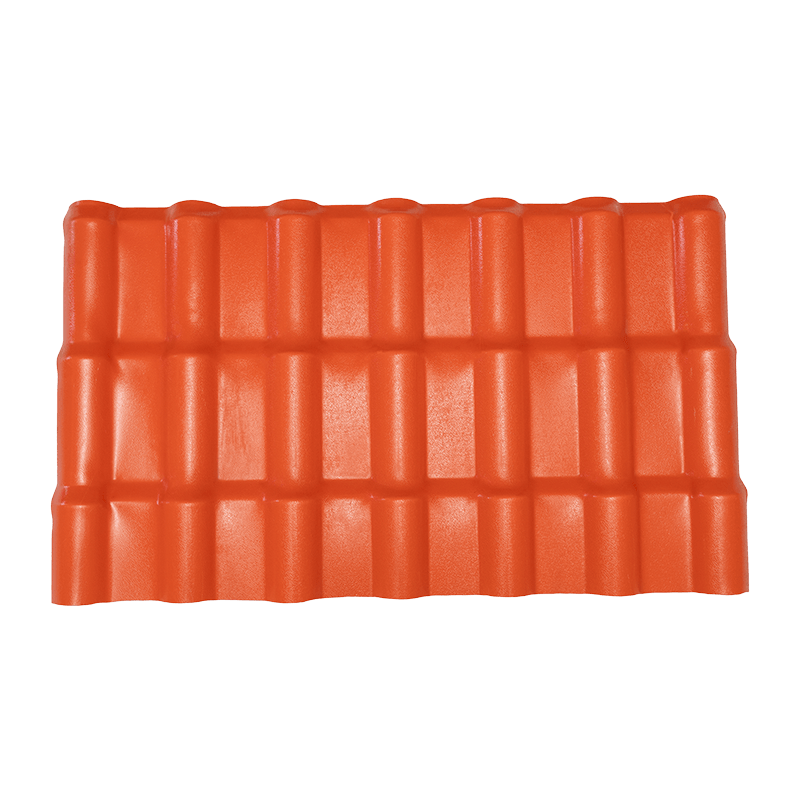
ASA (Acrylonitrile Styrene Acrylate) is an engineering-grade polymer specifically engineered for outdoor exposure. Its molecular structure inherently resists UV-induced color fading and surface chalking — two primary causes of gloss loss in roofing materials. Powder-coated steel and aluminum, while offering initial surface appeal, rely on a bonded coating layer that degrades independently from the substrate beneath, making them more vulnerable to long-term gloss deterioration.
What Causes Gloss Loss in Roofing Materials?
Gloss retention is measured as the percentage of original gloss value retained after a defined period of weathering — typically assessed using 60° gloss meter readings per ASTM D523 or ISO 2813 standards. A material retaining above 70% of its original gloss after 10 years is generally considered excellent.
The primary factors that drive gloss loss include:
- UV radiation: Breaks down polymer chains and oxidizes metallic coatings, causing surface chalking and fading.
- Thermal cycling: Repeated expansion and contraction cracks or detaches surface coatings from metal substrates.
- Moisture and salt air: Accelerates oxidation on metallic surfaces and degrades paint adhesion, a critical concern for any coastal villa roofing materials supplier sourcing products for marine environments.
- Airborne pollutants: Acid rain and particulate matter etch and erode surface finishes over time.
ASA Roofing Tiles: Built-In Gloss Durability
Unlike coated metals, ASA roofing tiles do not rely on a surface layer for their gloss and color. The ASA polymer is pigmented throughout the material, meaning surface abrasion or micro-cracking does not expose an uncolored substrate. This is a fundamental structural advantage.
Independent accelerated weathering tests simulating 10 years of outdoor exposure (ASTM G154, xenon arc lamp testing) show that ASA materials typically retain 75–85% of original gloss — significantly above the industry threshold for "excellent" performance. This performance is a key reason why professional architectural roofing solutions factories increasingly specify ASA composite tiles for projects demanding long-term aesthetics without repainting cycles.
Key performance characteristics of ASA roofing tiles in weathering scenarios:
- Gloss retention of ≥75% after 10 years in temperate and subtropical climates
- No chalking or surface oxidation — color remains uniform throughout service life
- Delta E (color change) values typically below 3.0 after accelerated UV testing — imperceptible to the naked eye
- Resistant to salt-spray degradation per ASTM B117, making them reliable for seaside installations
Powder-Coated Steel Roofing: Surface Coating Limitations
Powder-coated steel roofing offers strong initial gloss and a wide range of color options. The thermosetting powder coating process creates a hard, dense film that bonds to the steel substrate — typically at 60–80 microns thickness. However, this coating is a separate functional layer with its own degradation timeline.
Field data from roofing installations in southern Europe and Southeast Asia (high UV index regions) indicate that standard polyester powder-coated steel panels lose 30–50% of original gloss within 5–7 years without additional protective treatment. While PVDF (Kynar) coatings perform significantly better — retaining up to 70% gloss after 10 years — they carry a premium cost that narrows the price advantage over ASA alternatives.
Additional vulnerabilities of powder-coated steel include:
- Edge and cut-point corrosion: Any chip, scratch, or cut edge exposes bare steel to moisture — accelerating rust formation that undermines gloss from beneath.
- Delamination risk: Thermal cycling in climates with 40°C+ temperature swings can cause micro-delamination between coating and substrate.
- Chalking: UV-degraded polyester binders leave a white powdery surface residue that dramatically reduces perceived gloss.
Powder-Coated Aluminum Roofing: Better, But Still Coating-Dependent
Aluminum roofing panels with powder coating avoid the corrosion risk inherent in steel, but they share the same fundamental coating-layer limitation. Since aluminum itself is naturally matte-gray, all gloss performance depends entirely on the integrity of the powder coat.
High-quality powder-coated aluminum panels using PVDF coatings can achieve gloss retention of 65–72% after 10 years — respectable performance, but still measurably below ASA roofing tiles in controlled weathering comparisons. Anodized aluminum performs similarly in gloss retention, though it offers a narrower aesthetic range.
For large-span commercial or industrial installations — such as heat insulation warehouse roofing sheets where aesthetics are secondary to function — powder-coated aluminum remains a practical choice. However, for residential or architectural projects where sustained curb appeal matters, ASA tiles present a stronger long-term case.
Side-by-Side Comparison: Gloss Retention Over Time
| Material | Gloss Retention @ 5 Years | Gloss Retention @ 10 Years | Corrosion Risk | Recoating Required? |
|---|---|---|---|---|
| ASA Roofing Tiles | 85–90% | 75–85% | None | No |
| Powder-Coated Steel (Polyester) | 60–70% | 50–65% | High (at chips/edges) | Often yes (7–10 yrs) |
| Powder-Coated Steel (PVDF) | 75–80% | 65–72% | Moderate | Possible (10–15 yrs) |
| Powder-Coated Aluminum (PVDF) | 78–83% | 65–72% | Low | Possible (10–15 yrs) |
Performance in Harsh and Coastal Environments
Environmental conditions significantly amplify the performance gap between ASA tiles and coated metal roofing. In coastal zones, salt-laden air accelerates the oxidation of steel substrates and degrades coating adhesion — even on powder-coated aluminum panels — within 3–5 years of installation.
By contrast, anti-corrosion ASA roofing tiles available through specialized wholesale channels are chemically inert to salt spray, moisture, and mild acid exposure. There is no metallic substrate to corrode and no coating layer to delaminate. This is why ASA composite tiles have become the preferred specification among suppliers acting as a coastal villa roofing materials supplier for beachfront and island properties across Southeast Asia, the Mediterranean, and the Caribbean.
In high-wind and storm-prone regions, the choice of roofing material also affects gloss durability indirectly. Impact from wind-borne debris, for example, chips powder coatings on metal panels — initiating rust streaking that visually degrades the surface. ASA tiles, particularly those manufactured to withstand strong weather events, offer impact resistance ratings up to IK10, limiting surface damage even in storm conditions. Projects specifying hurricane-resistant stone coated steel tiles may prioritize structural performance, but where aesthetics and long-term gloss are equally important, ASA remains the stronger contender.
Maintenance Implications and Long-Term Cost
Gloss retention directly affects maintenance frequency and lifecycle cost. A roof that retains its gloss naturally requires no repainting, resurfacing, or coating renewal — a significant operational saving over a 20–30 year service life.
Estimated Maintenance Cost Comparison Over 20 Years (Per 100m²)
- ASA roofing tiles: Minimal maintenance — periodic cleaning only. Estimated cost: €200–€400 over 20 years.
- Polyester powder-coated steel: Recoating typically required at year 7–10. Estimated cost: €1,500–€2,500 including labor.
- PVDF powder-coated aluminum: Recoating possible at year 12–15. Estimated cost: €1,000–€1,800 including labor.
For contractors and developers sourcing through an architectural roofing solutions factory on large-scale residential or commercial builds, these maintenance cost differentials become highly significant when multiplied across multiple units or buildings.
When Powder-Coated Metal May Still Be the Right Choice
Despite ASA's advantages in gloss retention, there are valid scenarios where powder-coated steel or aluminum roofing remains appropriate:
- Large-span industrial roofing: For wide-bay structures like logistics centers or factories, metal panels offer superior span-to-weight efficiency. Projects specifying heat insulation warehouse roofing sheets often prioritize thermal performance and span capability over aesthetic gloss longevity.
- Budget-constrained projects: Standard polyester powder-coated steel carries a lower upfront cost, which may suit short-term or low-visibility installations.
- Architectural standing seam applications: Certain contemporary architectural styles specifically call for the metallic finish of aluminum or PVDF-coated steel — a visual quality ASA tiles do not replicate.
The evidence is consistent: ASA roofing tiles deliver superior gloss retention over prolonged weathering compared to both powder-coated steel and powder-coated aluminum in most residential and architectural applications. The key differentiator is structural — ASA's color and gloss are inherent to the material itself, not dependent on a surface coating that degrades independently.
For buyers prioritizing a roof that looks as good in year 15 as it did on installation day — without repainting or resurfacing cycles — ASA roofing tiles represent a technically sound and cost-effective choice. Whether sourced through a direct anti-corrosion ASA roofing tiles wholesale channel or specified via an architectural firm, the long-term gloss performance data firmly supports ASA as the preferred material where sustained surface aesthetics are a project requirement.