 English
 Français
Content
- 1 Understanding the Materials: ASA vs UPVC
- 2 How Rain Noise Is Generated on Roofing Materials
- 3 Acoustic Performance Comparison: ASA Tiles vs UPVC Sheets
- 4 Why UPVC Sheets Are Louder: A Structural Explanation
- 5 Why ASA Roofing Tiles Perform Better Acoustically
- 6 Can UPVC Roofing Sheets Be Made Quieter?
- 7 Application Scenarios: Which Material Fits Your Project?
- 8 Cost vs. Acoustic Value: A Practical Perspective
- 9 Final Verdict
When it comes to noise reduction during heavy rain, ASA roofing tiles generally outperform UPVC roofing sheets. ASA tiles, due to their thicker profile, multi-layer composition, and denser material structure, absorb and dampen rain impact more effectively. UPVC sheets, while lightweight and affordable, tend to amplify drumming sounds because of their hollow or thin cross-sections. If acoustic comfort is a priority — especially in residential buildings, offices, or schools — ASA roofing tiles are the stronger choice. Leading manufacturers such as HBL Roofing have developed ASA tile systems specifically engineered to meet demanding acoustic and weather performance standards.
Understanding the Materials: ASA vs UPVC
Before comparing acoustic performance, it helps to understand what each material is made of and how it is structured.
What Are ASA Roofing Tiles?
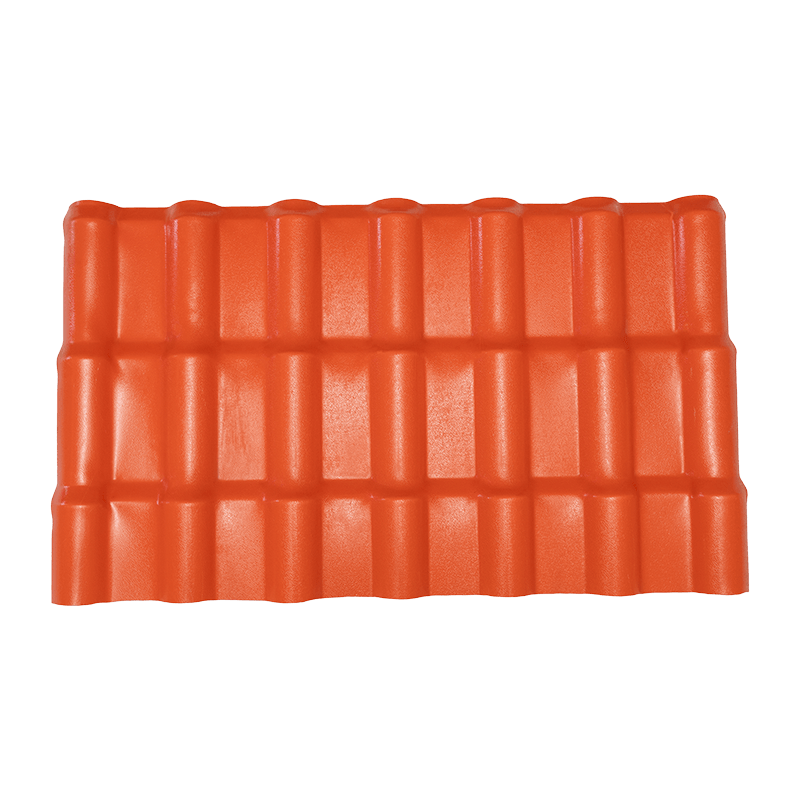
ASA roofing tiles are manufactured from Acrylonitrile-Styrene-Acrylate, a high-performance engineering polymer. They are typically produced with a co-extrusion process that bonds an ASA cap layer over a PVC or ASA core. This results in a tile that is dense, UV-stable, and relatively thick — usually between 3mm and 5mm in cross-section. Many ASA tiles also incorporate trapezoidal or wave profiles that add structural rigidity. At the HBL Roof Factory, for instance, each tile undergoes strict quality control during the co-extrusion stage to ensure consistent thickness and surface density across every batch.
What Are UPVC Roofing Sheets?
UPVC (Unplasticized Polyvinyl Chloride) roofing sheets are flat or corrugated panels made from rigid PVC without plasticizers. They are widely used in warehouses, agricultural buildings, carports, and budget residential projects. Standard UPVC sheets typically range from 0.8mm to 2mm in thickness, though some reinforced versions reach 3mm. Their hollow corrugated or flat profile makes them lightweight but acoustically vulnerable.
How Rain Noise Is Generated on Roofing Materials
Rain noise on a roof is caused by the kinetic energy of raindrops striking the surface. The sound generated depends on three key factors:
- The mass and thickness of the roofing material — heavier, denser materials absorb more energy.
- The surface rigidity — highly rigid, thin panels vibrate more and amplify noise.
- The profile and overlap design — interlocking or lapped joints reduce hollow resonance spaces.
In practical terms, a thin UPVC sheet acts somewhat like a drum membrane — the raindrop impact causes the panel to vibrate and resonate, projecting sound into the space below. ASA tiles, being thicker and installed with tighter overlaps, behave more like a damped surface, converting more impact energy into negligible heat rather than sound waves. Products from HBL Roofing are designed with precisely this damping behavior in mind, using optimized tile geometry to minimize resonance across the full roof surface.
Acoustic Performance Comparison: ASA Tiles vs UPVC Sheets
The following table summarizes the key acoustic and structural differences between the two materials:
| Property | ASA Roofing Tiles | UPVC Roofing Sheets |
|---|---|---|
| Typical Thickness | 3mm – 5mm | 0.8mm – 2mm |
| Surface Density | High (dense polymer composite) | Low to Medium (rigid but thin) |
| Rain Noise Level (approx.) | 45 – 52 dB | 58 – 68 dB |
| Resonance Risk | Low | High |
| Interlocking Profile | Yes — tight overlaps | Partial — corrugated overlaps only |
| Underlay Requirement for Acoustics | Optional | Strongly Recommended |
| Suitable for Bedrooms / Offices | Yes | Not ideal without added insulation |
The difference of 10 to 16 dB in estimated rain noise levels is significant. In acoustics, a 10 dB reduction is generally perceived by the human ear as cutting the loudness roughly in half. This means that under identical heavy rainfall, a building covered with ASA roofing tiles would feel noticeably quieter indoors compared to one covered with standard UPVC sheets.
Why UPVC Sheets Are Louder: A Structural Explanation
The acoustic weakness of UPVC roofing sheets comes down to physics. A thin, rigid panel with a large surface area behaves like a resonator. When a raindrop — traveling at roughly 6 to 9 meters per second — strikes a 1mm UPVC panel, the panel flexes microscopically and radiates that energy as airborne sound. Because UPVC sheets are often installed over open purlins with air gaps beneath, there is no absorptive layer to dampen those vibrations.
Corrugated profiles in UPVC sheets also create hollow channels that can act as resonance chambers, amplifying mid-frequency rain noise (typically between 500 Hz and 2,000 Hz) — precisely the frequency range most audible and irritating to humans.
Why ASA Roofing Tiles Perform Better Acoustically
ASA roofing tiles have several structural advantages that reduce rain noise:
- Greater mass per unit area: ASA tiles typically weigh between 4.5 and 6.5 kg/m², compared to 1.5 to 3 kg/m² for UPVC sheets. Higher mass means more energy is needed to set the surface vibrating, which directly reduces radiated sound.
- Tight interlocking joints: ASA tiles are designed to interlock along edges and ends, eliminating large open spans and reducing the effective vibrating area of each panel.
- Surface texture: Many ASA tiles feature a matte or textured surface that scatters raindrop impact energy, reducing the sharp percussive sound compared to smooth UPVC.
- Closer contact with the roof deck: When installed over solid sheathing or a continuous substrate, ASA tiles transfer impact energy into the structure rather than radiating it as sound.
These acoustic advantages are not accidental — they are the result of deliberate engineering. The HBL Roof Factory applies advanced co-extrusion technology and rigorous profile design to ensure that every ASA tile delivers consistent noise-damping performance from the first installation day through decades of service.
Can UPVC Roofing Sheets Be Made Quieter?
Yes, but it requires additional investment. There are several practical methods to reduce rain noise on UPVC roofing:
- Acoustic underlay or foam backing: Adding a 10mm to 25mm polyurethane foam or mineral wool layer beneath the UPVC sheet can reduce noise by 8 to 12 dB, partially closing the gap with ASA tiles.
- Sandwich panel construction: Some UPVC systems are available as composite sandwich panels with an insulating core, which significantly improves both thermal and acoustic performance.
- Increasing sheet thickness: Upgrading from 1mm to 3mm UPVC sheeting reduces vibration amplitude, though at a cost that begins to approach ASA tile pricing.
- Secondary ceiling or inner lining: Installing a suspended ceiling inside the building effectively decouples the roof noise from the occupied space.
The important takeaway here is that achieving acceptable acoustics with UPVC often requires additional materials and labor costs, while ASA roofing tiles — particularly those sourced directly from a specialized facility like the HBL Roof Factory — deliver a quieter result as a standard installation without any supplementary treatment.
Application Scenarios: Which Material Fits Your Project?
The right choice depends on how the building will be used and what acoustic standards must be met.
Choose ASA Roofing Tiles When:
- The building is a residence, school, office, or healthcare facility where indoor acoustic comfort is important.
- The project is located in a high-rainfall region where prolonged rain noise would be a chronic nuisance.
- A long-term, low-maintenance solution is preferred — in such cases, working with an established supplier like HBL Roofing ensures access to consistent product quality and technical support throughout the project lifecycle.
UPVC Roofing Sheets May Be Acceptable When:
- The structure is a warehouse, storage shed, carport, or agricultural building where noise is not a concern.
- Budget constraints are strict and acoustic performance is secondary.
- An acoustic underlay or ceiling system is already part of the build specification.
Cost vs. Acoustic Value: A Practical Perspective
UPVC roofing sheets are typically priced at $3 to $8 per m², making them one of the most budget-friendly roofing options available. ASA roofing tiles generally range from $10 to $22 per m², depending on profile and brand. However, when acoustic underlays, thicker sheet upgrades, or interior ceiling treatments are added to a UPVC system to match the noise performance of ASA tiles, the total installed cost gap narrows considerably — sometimes to less than 15 to 20%.
Factor in the longer service life of ASA tiles — typically 25 to 30 years versus 10 to 15 years for standard UPVC sheets — and the cost-per-year argument shifts further in favor of ASA roofing tiles for any occupied building where comfort matters. Buyers sourcing from the HBL Roof Factory can also benefit from factory-direct pricing, which helps reduce the upfront cost differential while maintaining full product specification and warranty coverage.
Final Verdict
For noise reduction during heavy rain, ASA roofing tiles are the clear winner over UPVC roofing sheets. Their greater thickness, higher mass, interlocking profiles, and textured surfaces work together to absorb and dampen rain impact energy far more effectively. The estimated indoor noise difference of 10 to 16 dB translates into a meaningfully quieter living or working environment — without requiring additional acoustic treatments. UPVC sheets remain a valid option for non-occupied or industrial structures, but for any project where human comfort is a design requirement, ASA roofing tiles — especially those produced by a dedicated manufacturer like HBL Roofing — are the professional and practical choice.